
Last updated November 4, 2026
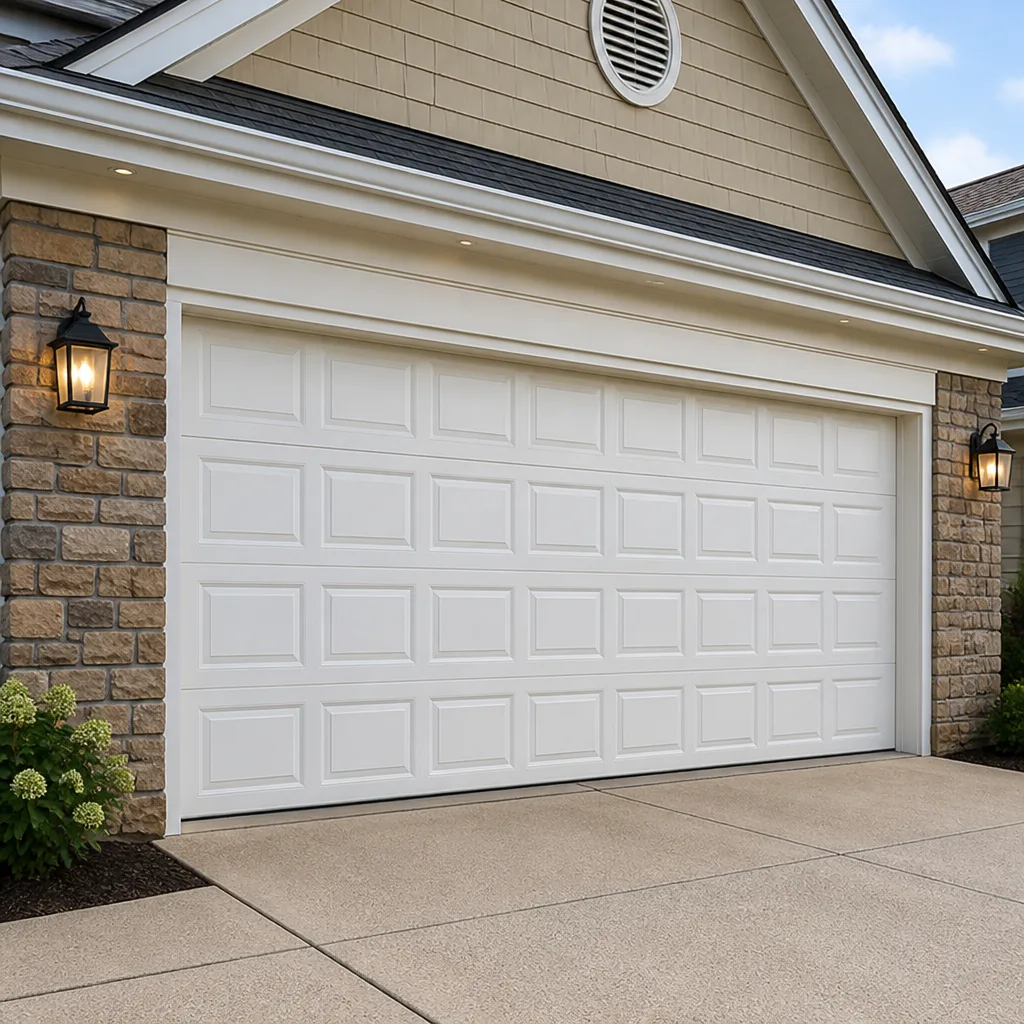 Raised-panel steel
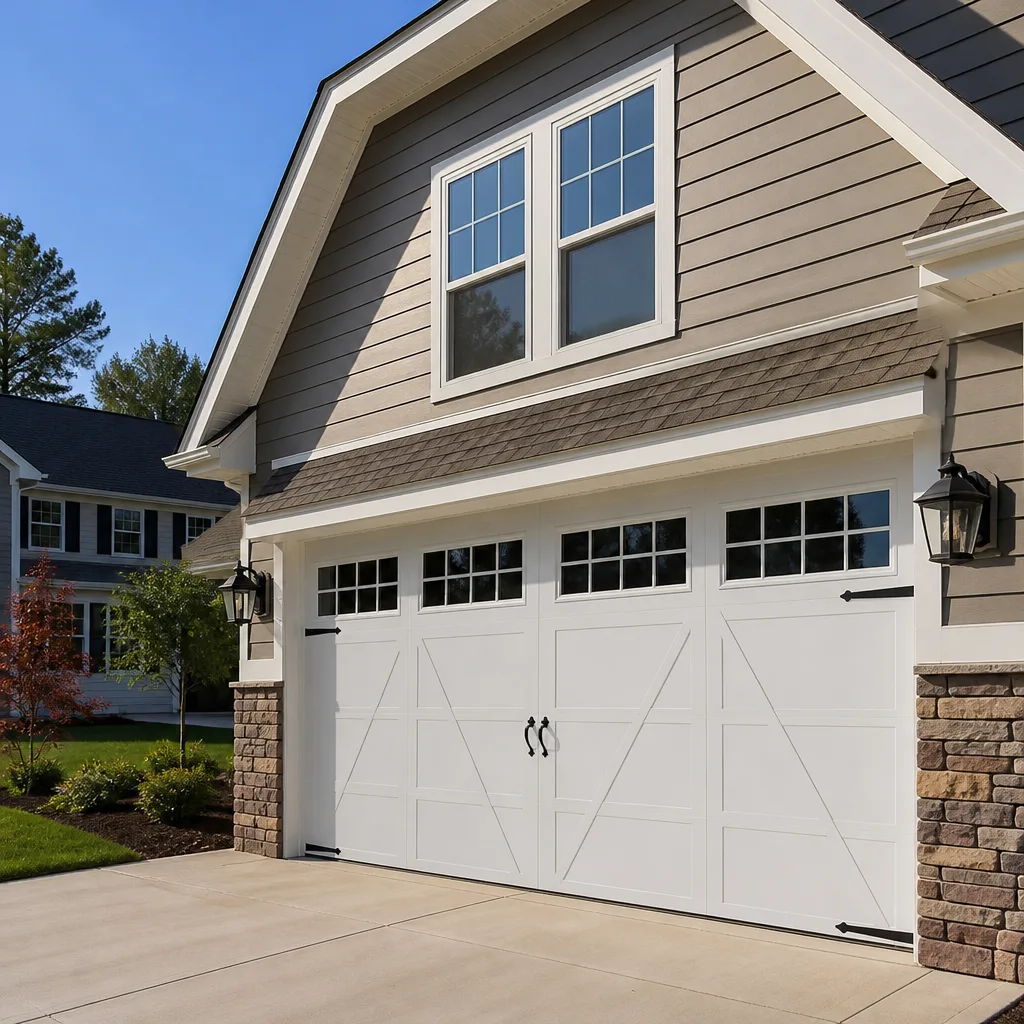
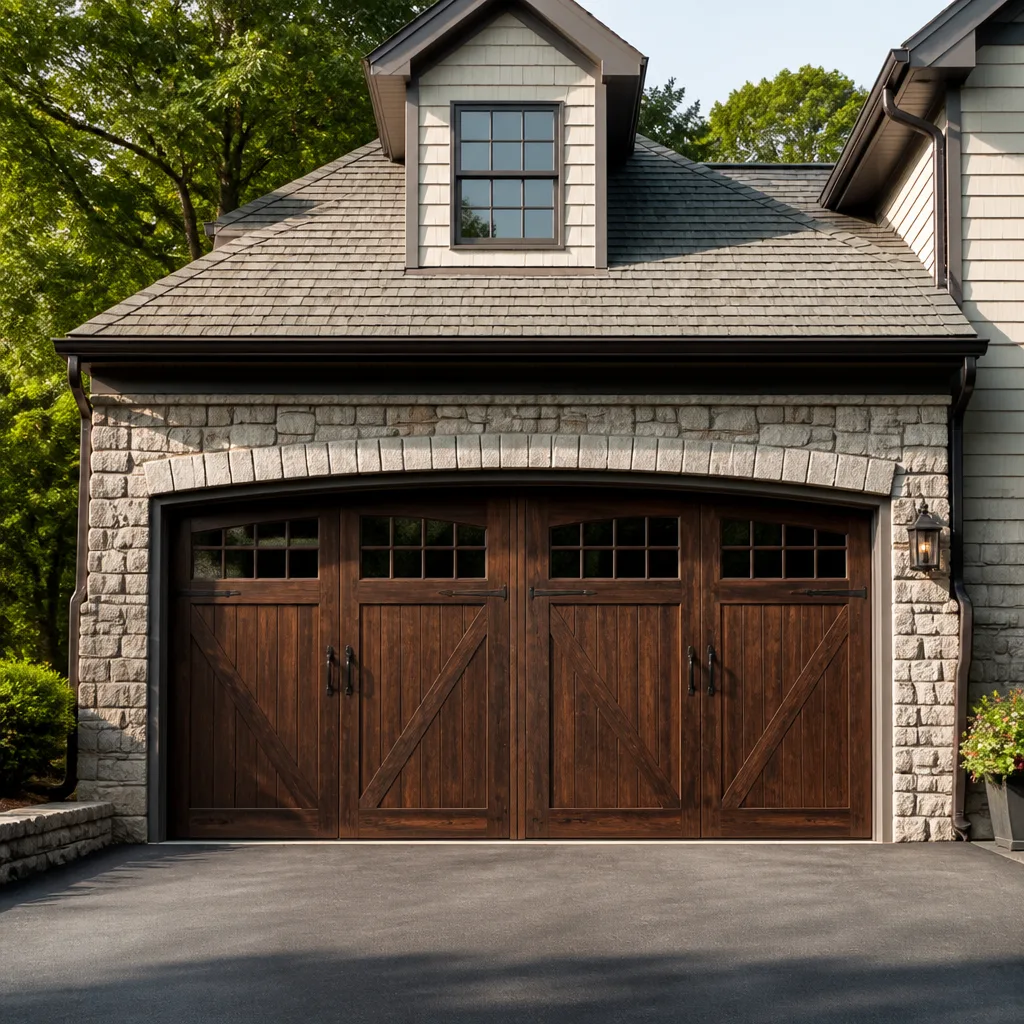 Carriage house
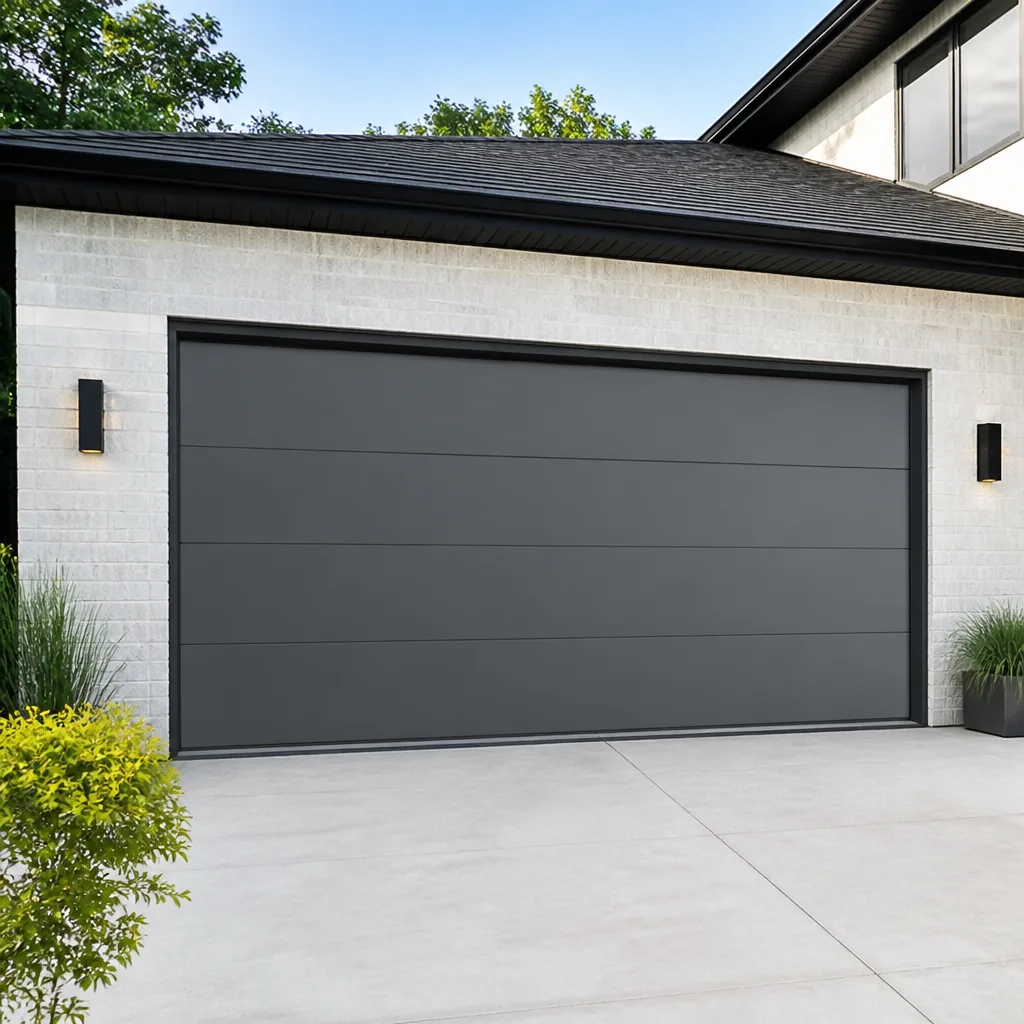 Modern flush
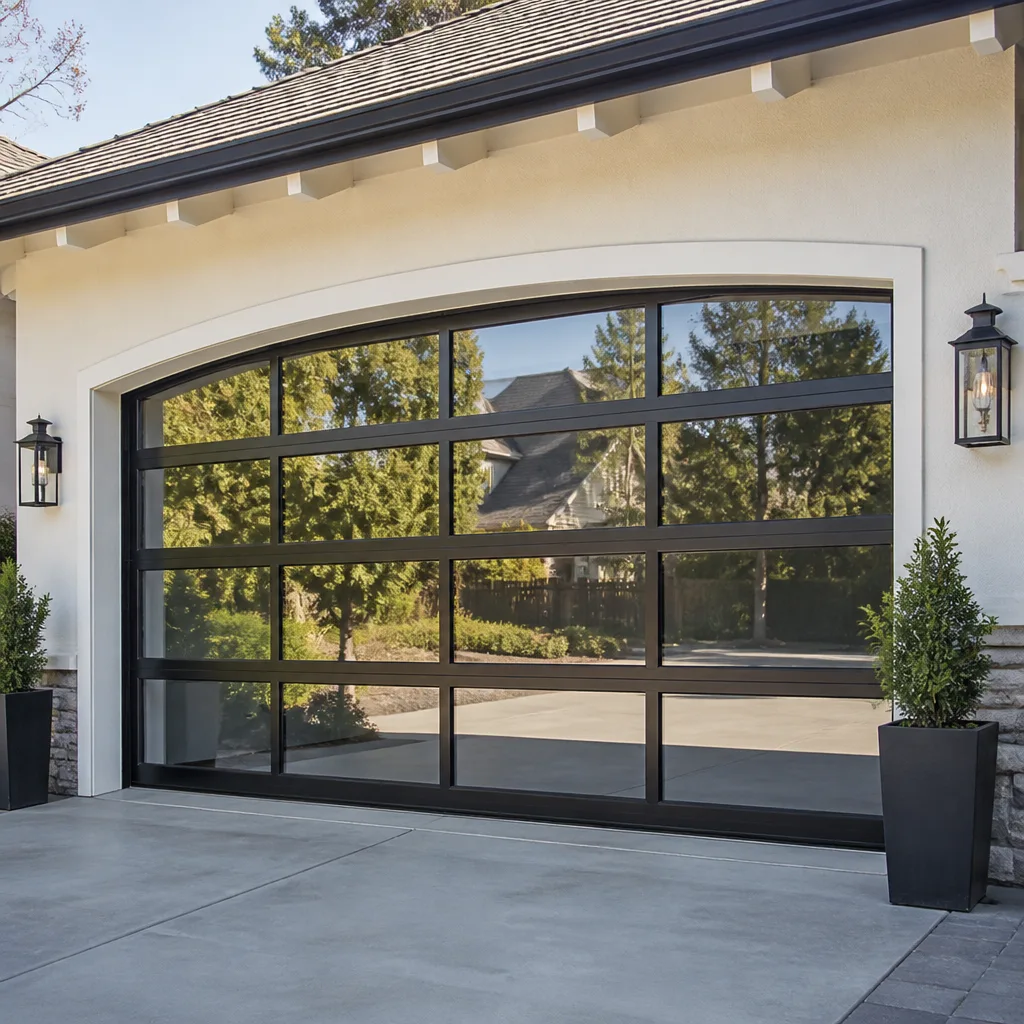 Full-view glass
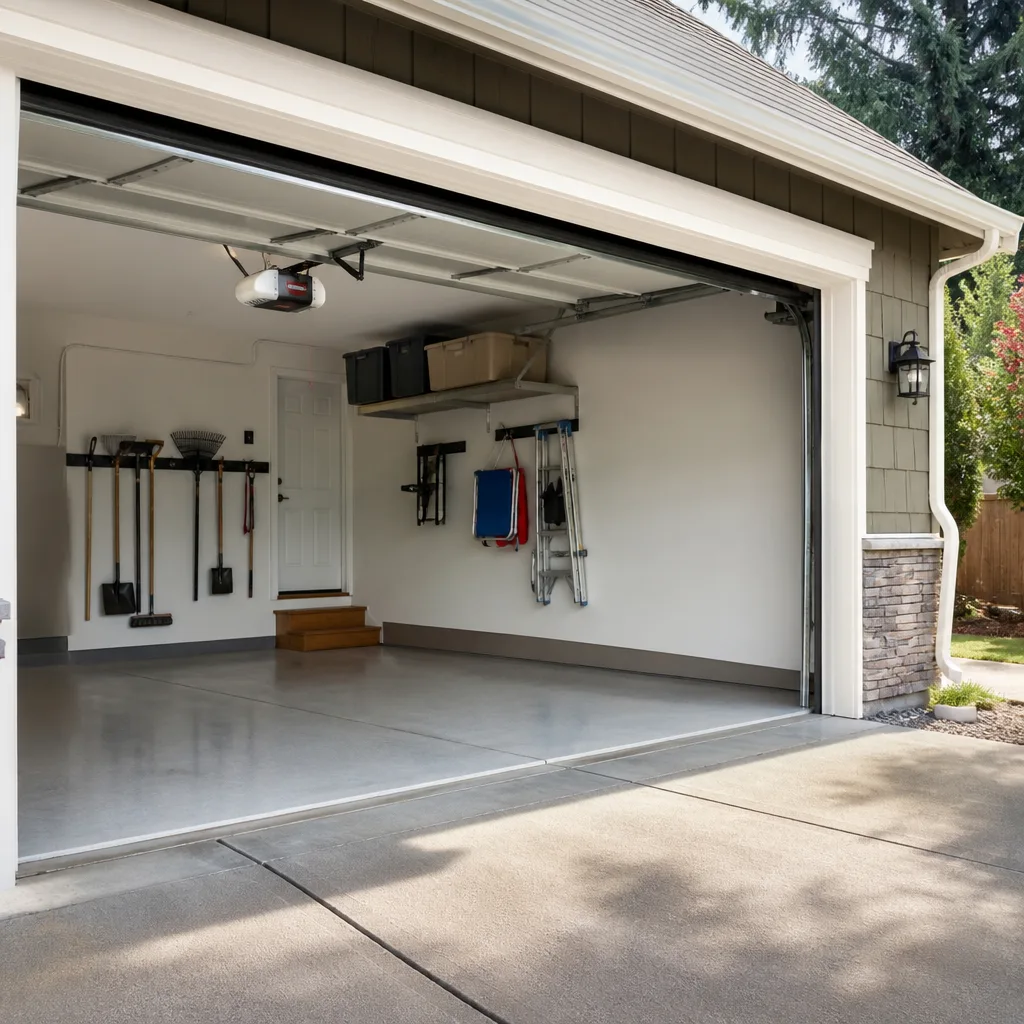 LiftMaster openers
 Chamberlain openers
Full 25-point door and opener safety check with every visit - springs, cables, rollers, tracks, and your LiftMaster or Chamberlain opener included
You get a price before we start. It does not change when the truck arrives.
Get your free estimateGarage Door Repair Troubleshooting in La Habra: Common Problems and How to Fix Them
A misaligned safety sensor gets blamed for a huge share of “door won’t close” service calls in La Habra. But in our experience, the sensor is often fine. The real culprit is a logic board glitch, a bent track, or a remote battery that died quietly. Chasing the wrong symptom means buying parts you don’t need and still having a door that won’t move. This guide walks you through reading the actual failure point, so you spend your time and money on the fix that matters.
Quick Answer
Garage door troubleshooting in La Habra starts with identifying whether the problem lives in the door hardware or the opener, because the two fail differently and have different fixes. A door that won’t open is usually a broken spring, a detached opener arm, or a locked trolley. A door that won’t close typically points to the safety sensors, the close-force setting, or a track obstruction. Start with the tests below, and stop the moment you hit anything involving a spring under tension.
Styles & brands we work with
- Raised-panel steel
- Carriage house
- Modern flush
- Full-view glass
- LiftMaster openers
- Chamberlain openers
Table of Contents
- Symptom-to-Cause Mapping: Read the Failure Point First
- How La Habra’s Climate Affects Your Door
- Three Safe Tests You Can Do Today
- Is It the Door or the Opener?
- The Stop-Here List: When DIY Ends
- Why Your Door Is Noisy and What That Noise Means
- Door Reverses Mid-Travel: Three Distinct Causes
- Common Mistakes to Avoid
Symptom-to-Cause Mapping: Read the Failure Point First
Most La Habra homeowners call us describing a symptom: “it won’t open,” “it reverses,” “it’s loud.” Symptoms are useful starting points but they rarely point to a single cause. The same symptom can trace back to three or four different components, and each fix carries a different cost and urgency. Here’s how we map what you’re seeing to what’s actually failing.
Door won’t open at all:
- Broken torsion spring: the opener motor runs but the door stays put, or you hear a loud bang from above the door beforehand.
- Opener in vacation lock mode: the wall console blinks but the remote does nothing.
- Disconnected opener arm: the carriage moves along the rail but the door itself doesn’t budge.
- Dead opener logic board: no response from the wall button or remote, but the outlet has power.
Door won’t close all the way:
- Photo-eye misalignment: one sensor blinks red, the other glows solid green.
- Dirty sensor lens: both lights are on but the door reverses two feet from the floor.
- Track obstruction: a pebble, a stray broom, or a bent track bracket is catching a roller.
- Close-force setting too low: the door stops and reverses on flat ground with no visible obstruction.
Door opens a few inches and stops:
- Broken spring: the opener can’t lift the full weight of the door without spring assistance.
- Damaged cable: one side of the door lifts while the other stays down.
- Worn rollers binding in the track: the door moves freely by hand for a foot, then catches.
Mapping the symptom to the most likely cause before reaching for a tool saves you from replacing a perfectly good opener when the real issue is a $40 roller or a $15 sensor.
How La Habra’s Climate Affects Your Door
La Habra sits in a climate that most national troubleshooting guides don’t write about. We don’t deal with freeze-thaw cycles or snow load here. What we do deal with is a dry, dusty environment and temperature swings that can hit 30 or 40 degrees between cool mornings and hot afternoons. That combination does specific things to a garage door system.
Dust is the quiet problem. The fine, dry air that settles across the Puente Hills side of La Habra works its way into photo-eye lenses, track channels, and opener rail grease. A sensor that worked perfectly in January can refuse to close the door in August because a film of dust has built up on the lens. The fix is usually a dry cloth and a gentle wipe, but it’s a maintenance step most national guides ignore because they’re written for humid or cold climates.
Temperature swings affect spring tension more than people expect. Torsion springs are calibrated to a specific weight balance. As the temperature climbs through a La Habra afternoon, metal expands slightly and the door’s balance can shift by a pound or two. That’s rarely enough to cause a failure on its own, but if a spring is already tired or near the end of its cycle life, a hot afternoon can expose the weakness that a cool morning hid. If your door opens fine at 7am but struggles at 3pm, the spring is telling you something.
Rollers also behave differently in dry heat. Nylon rollers hold up well here, but older metal rollers shed lubrication faster in arid air. That’s when you start hearing the grinding or squealing that means a roller bearing is running dry. A quick inspection tells you whether lubrication will buy you time or the roller needs replacing.
Three Safe Tests You Can Do Today
Before you call anyone, run through these three tests. Each one is safe for a homeowner to perform, and each one narrows down the problem significantly. None of them involve touching a spring, cable, or any component under tension.
- The manual disconnect test. Pull the red emergency release cord hanging from the opener rail. This disconnects the door from the opener carriage. Now try to lift the door by hand. A properly balanced door lifts smoothly to about waist height and stays put when you let go. If it feels heavy, crashes down, or won’t stay open, the problem is in the door’s spring or cable system, not the opener.
- The balance test. With the door still disconnected, lift it halfway and release it gently. A healthy door holds its position. A door that drifts down needs more spring tension. A door that shoots up has too much tension. Both are spring adjustments that require a trained technician, but knowing the result tells you where the problem lives.
- The force-setting check. Reconnect the door to the opener. Hold the bottom of the door with both hands as it closes. If the door reverses at the lightest touch, the close force is set correctly. If it keeps pushing down against your hands, the force setting is too high and needs adjustment. This is a two-minute check that reveals a lot about how safely your system is calibrated.
These three tests answer the biggest question in garage door repair: is the problem mechanical or electronic? Once you know that, the fix becomes much clearer.
Is It the Door or the Opener?
Mixing up door hardware problems and opener problems leads to replacing the wrong component. We see it regularly in La Habra: a homeowner replaces a LiftMaster opener because the door wouldn’t lift, only to discover the real issue was a broken torsion spring that would have cost far less to fix. Or the reverse: a Genie opener gets blamed for a reversed door when the issue was a sticking roller in a bent track.
Here’s the simplest rule: if the door moves when you operate it by hand, the opener is in play. If the door feels heavy, stuck, or unbalanced by hand, the opener is probably innocent. The opener’s job is to move a balanced door. It was never designed to muscle a heavy, unbalanced one up the tracks. When a door is heavy and unbalanced, the opener strains, overheats, and eventually burns out its motor or strips its gear. But that’s a symptom of the spring problem, not the root cause.
Opener-specific failures have their own signature. A humming motor with no movement points to a stripped gear or a broken drive belt inside the unit. A door that opens from the wall button but not the remote suggests a receiver or remote-sync issue, not a door problem. A door that runs for a second and stops suggests a travel-limit or RPM sensor inside the opener’s logic board. These are all garage door opener repair issues, and they’re distinct from door hardware failures.
Chamberlain and LiftMaster openers, which dominate the La Habra market, both use a similar diagnostic language: blinking arrow lights, error codes on the wall console, and a self-test mode that cycles the door through its travel. If your opener has a light that blinks in a pattern, that pattern is a code. It’s telling you exactly what the opener thinks is wrong. Reading that code before you call saves a diagnostic visit.
The Stop-Here List: When DIY Ends
Some garage door problems are genuinely dangerous to troubleshoot alone. We’re not being cautious for the sake of caution. Torsion springs are under hundreds of pounds of tension. When one lets go, it releases that force instantly. Cables, brackets, and rollers can all become projectiles. Here’s the list of scenarios where you stop what you’re doing and call a professional.
- A torsion spring has snapped. You’ll typically hear it, a loud bang from above the closed or opening door. A broken spring means the door’s entire weight is unbalanced and the opener is now the only thing holding it up. Do not operate the door manually or with the opener. Do not stand under the door. The spring replacement requires winding bars, a full understand of spring wire size and cycle ratings, and a specific procedure that leaves zero margin for error.
- A lift cable has frayed or snapped. Cables work in pairs with the springs. When one fails, the door often jams crooked in the track. Attempting to straighten it or cut the old cable releases tension unevenly and can throw the remaining cable or a bracket across the garage.
- The door is off its tracks. A door that’s jumped the track can weigh 150 to 400 pounds, depending on the door’s size and material. It may be hanging at an angle, supported only by one roller or one cable. Any movement can trigger a cascade failure that brings the whole assembly down.
- A roller or hinge has pulled out of the door section. The bottom bracket is the most common failure point. It’s under constant pressure from the cable. A door with a pulled bottom bracket can fold or drop without warning.
- You’ve adjusted the force or travel limits and the door still misbehaves. At this point the issue is likely in the logic board or the internal gear drive, both of which live inside the opener casing. Opening an opener’s shell exposes capacitors that hold a charge even when unplugged. That’s a job for a technician who knows where those capacitors sit and how to discharge them safely.
For any of these, the diagnostic question is not “can I fix it?” but “is it worth the risk?” The answer in almost every case is no. Garage Door Service La Habra works on the brand you already have, so you’re not forced into a full replacement when a targeted repair is the right call.
Why Your Door Is Noisy and What That Noise Means
Noise is the most misread symptom in garage door troubleshooting. Homeowners lump every sound into one category: “it’s loud.” But a squeal, a grind, a rattle, and a pop are four different noises from four different components, and fixing the wrong one leaves you with the same noise tomorrow.
A high-pitched squeal or chirp almost always comes from rollers. Metal rollers with dry or worn bearings squeak as they spin against the track. Nylon rollers with damaged internal bearings do the same. The fix is usually replacement, not lubrication. Lubricating a roller with a sealed bearing does nothing, and oil on a metal roller just attracts more of that fine La Habra dust.
A grinding or scraping sound is metal on metal, and it lives in the track system. A bent track, a misaligned track bracket, or a roller that’s flattened on one side will grind as the door moves. This is not a noise to ignore. Grinding tracks wear down rollers, then bend brackets, then start putting lateral stress on the door sections themselves.
A rattle or clatter when the door moves suggests loose hardware. Hinges, bolts, and track brackets all work loose over years of vibration. A rattling door is usually a quick fix: tighten everything that should be tight, replace any hinge that’s worn beyond snugging. But it needs to be done thoroughly, because a loose hinge under load puts uneven force on the door section it’s bolted to.
A single loud pop during operation is the sound of a torsion spring letting go. It’s often described as a gunshot or a firecracker. If you hear that sound and the door won’t open, you’re on the stop-here list. Close the door to the garage if the door is down, keep everyone away from the opening, and call a professional.
Clopay and Amarr doors, both common in La Habra neighborhoods, use different roller and hinge profiles depending on the model. Knowing what’s installed matters when diagnosing noise, because a Clopay door with a continuous-shaft hinge system sounds different when it fails than an Amarr door with traditional leaf hinges. Our technicians see both daily, and that brand familiarity shortens the diagnosis.
Door Reverses Mid-Travel: Three Distinct Causes
A door that reverses mid-travel is one of the most common complaints we hear across La Habra. It’s also the symptom with the most distinct root causes, each requiring a different fix. Here’s how to tell them apart.
Cause one: the safety sensors are actually the problem. This is the classic. The door comes down fine for a few feet, then suddenly reverses and the opener lights flash. Look at the sensors near the floor on either side of the door. If one light is off, blinking, or amber when it should be green, the sensor has lost alignment or has a dirty lens. The fix is to realign the sensors so both lights are solid, then wipe each lens with a dry cloth. This is a two-minute fix and it’s the one that resolves the problem most often.
Cause two: the close-force setting is too sensitive. If the sensors are aligned, both lights are solid, and the door still reverses on flat, clean ground, the close force may be set too low. The opener monitors resistance as it closes. If it feels resistance that shouldn’t be there, a poorly calibrated force setting, it reverses. This is also common after a new door installation or a spring replacement, when the door’s weight profile changes and the old force setting no longer matches. Adjusting the close force a half-turn counterclockwise on a LiftMaster or Chamberlain opener often solves it. On a Genie, the adjustment lives in a different menu, usually behind the wall console or on the motor head itself.
Cause three: a physical obstruction or track bind. If the sensors align and the force setting is reasonable but the door still reverses, something is physically catching. A roller sticking in a bent track, a hinge bolt that’s backed out and is scraping the jamb, or a torsion tube bracket that’s shifted slightly. The door hits that point, the opener feels the resistance, and it reverses for safety. This is where the manual disconnect test pays off: if you feel a catch or a bind when you run the door by hand, you’ve found your obstruction.
Each cause has a different fix and a different cost. Knowing which one you’re dealing with before you start replacing parts is the difference between a $15 sensor cleaning and a $300 opener replacement that wouldn’t have fixed anything.
Common Mistakes to Avoid
- Replacing the sensors first. When a door won’t close, homeowners in La Habra often buy new sensors before checking alignment and lens cleanliness. In roughly half the cases we see, the original sensors are fine. A clean cloth and a steady realignment solves it.
- Lubricating a sealed roller. Nylon rollers with sealed bearings don’t take lubrication. Oil on the outside just collects dust and turns into grinding paste. If a roller squeals, replace it.
- Adjusting spring tension without winding bars. Never put a screwdriver or pry bar in a torsion spring’s winding cone. This is how serious injuries happen. Spring tension adjustment is a professional task, full stop.
- Ignoring a noisy door for months. Noise is a symptom. Grinding, squealing, and rattling all have specific causes that get worse with use. A door that’s noisy today will be broken soon, usually at the worst possible moment.
- Replacing the opener when the spring fails. A burned-out opener motor is often the victim of a broken spring, not the original problem. Replace the spring first, then evaluate the opener. Many openers survive a spring failure just fine.
- Resetting the travel limits without checking for obstructions. If a door binds because of a bent track, cranking up the force limit just makes the opener try harder to push through the obstruction. That’s hard on the opener and dangerous for the door.
Frequently Asked Questions
Most garage door repairs in La Habra run between $150 and $400, depending on the component and the door’s weight profile. A safety sensor realignment or cleaning is usually at the low end. A roller or hinge replacement lands in the middle. A torsion spring replacement, which requires a matched pair, sits at the high end, and opener logic board replacements can exceed it. The written estimate we give you before any work starts is the price you’ll pay, and estimates are free.
Yes, in most cases. We carry the common parts, springs, rollers, hinges, sensors, and opener gears, on our trucks, so a single visit often completes the repair. Call (833) 589-9397. We answer 24/7. Fast dispatch from 7am to 7pm, Sunday through Friday.
We work on the brand you already have. Our technicians are certified on LiftMaster, Chamberlain, Genie, Clopay, Amarr, Wayne Dalton, Craftsman, and Raynor equipment. Whether your opener is a two-year-old Chamberlain or an older Genie, we diagnose what’s there rather than pushing a replacement. Your Genie opener, our specialty.
That’s a classic La Habra heat symptom. As the temperature rises through the day, the metal in your tracks and door sections expands slightly. If a track is already tight, a roller is marginal, or a spring is nearing the end of its life, the afternoon heat exposes the weakness. The problem was always there; the heat just makes it visible. A morning door that reverses by 3pm usually needs a track adjustment or a spring inspection.
A mildly noisy door may run for months. But noise is a symptom, and the underlying cause is wearing. A squealing roller is heading toward a seized roller, and a seized roller can jump the track. A grinding track is bending a bracket, and a bent bracket pulls the door out of alignment. If the noise is new, get it looked at. If the noise is a loud pop, stop using the door entirely and call us.
No. Our estimate is free, and the price is set per job by the written estimate. You’ll see the number before any work begins, and the work starts only after you approve it. No surprise line items at the end, no service-call fee buried in the invoice. Call (833) 589-9397 for an exact quote.
See the difference
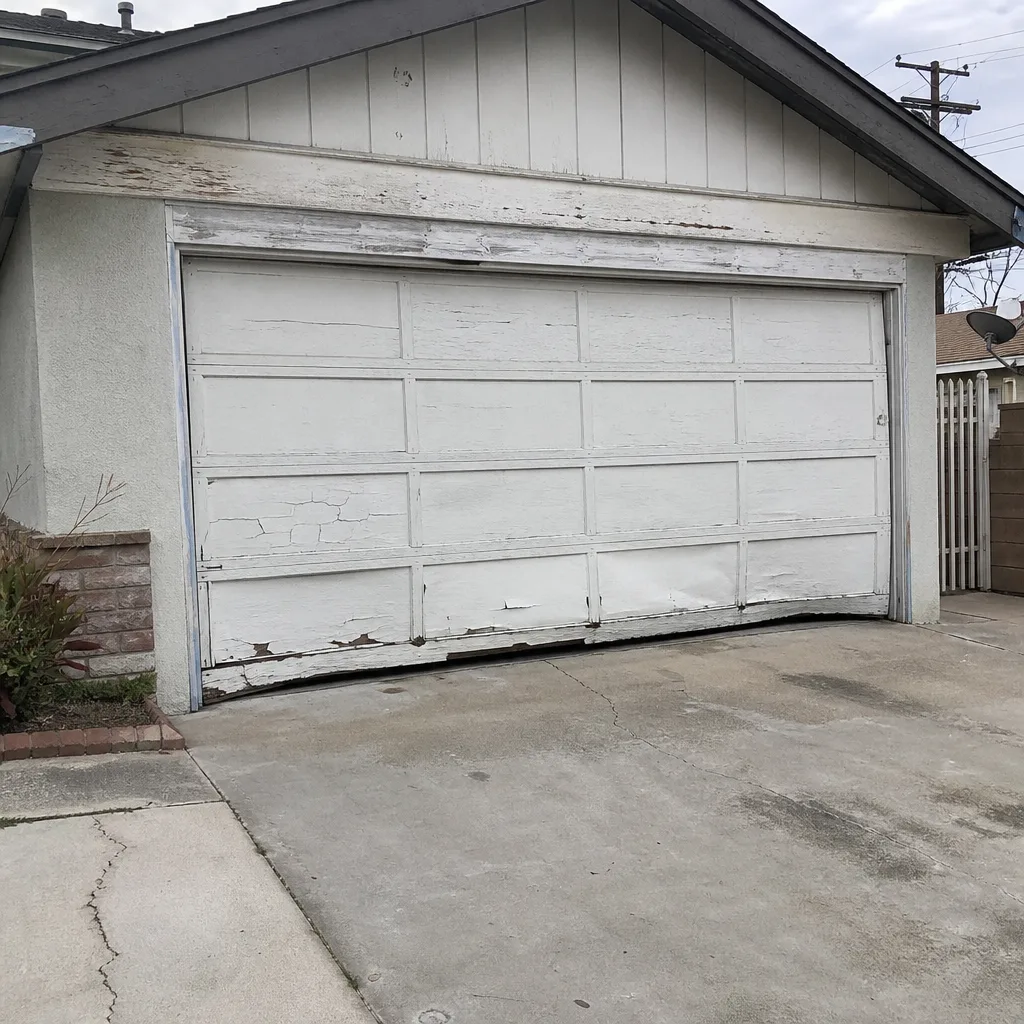 Before
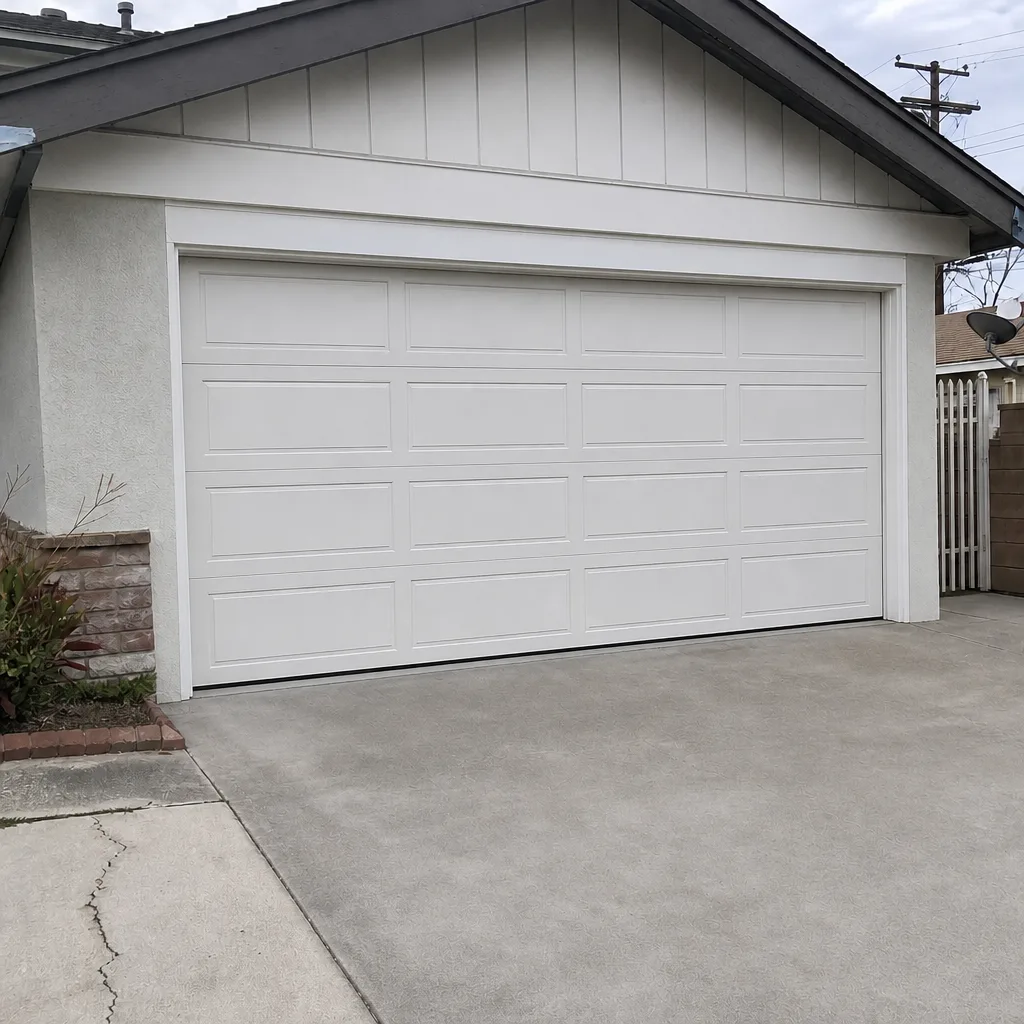 After
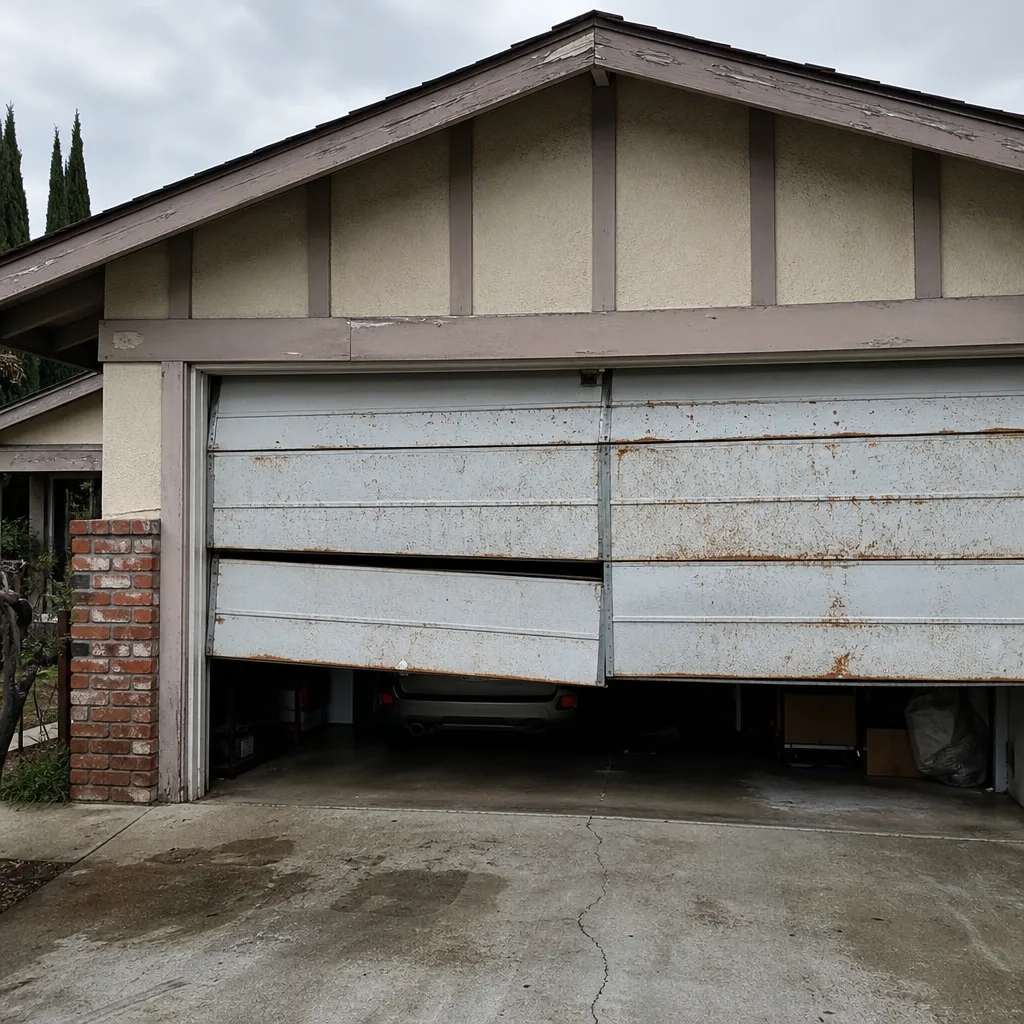 Before
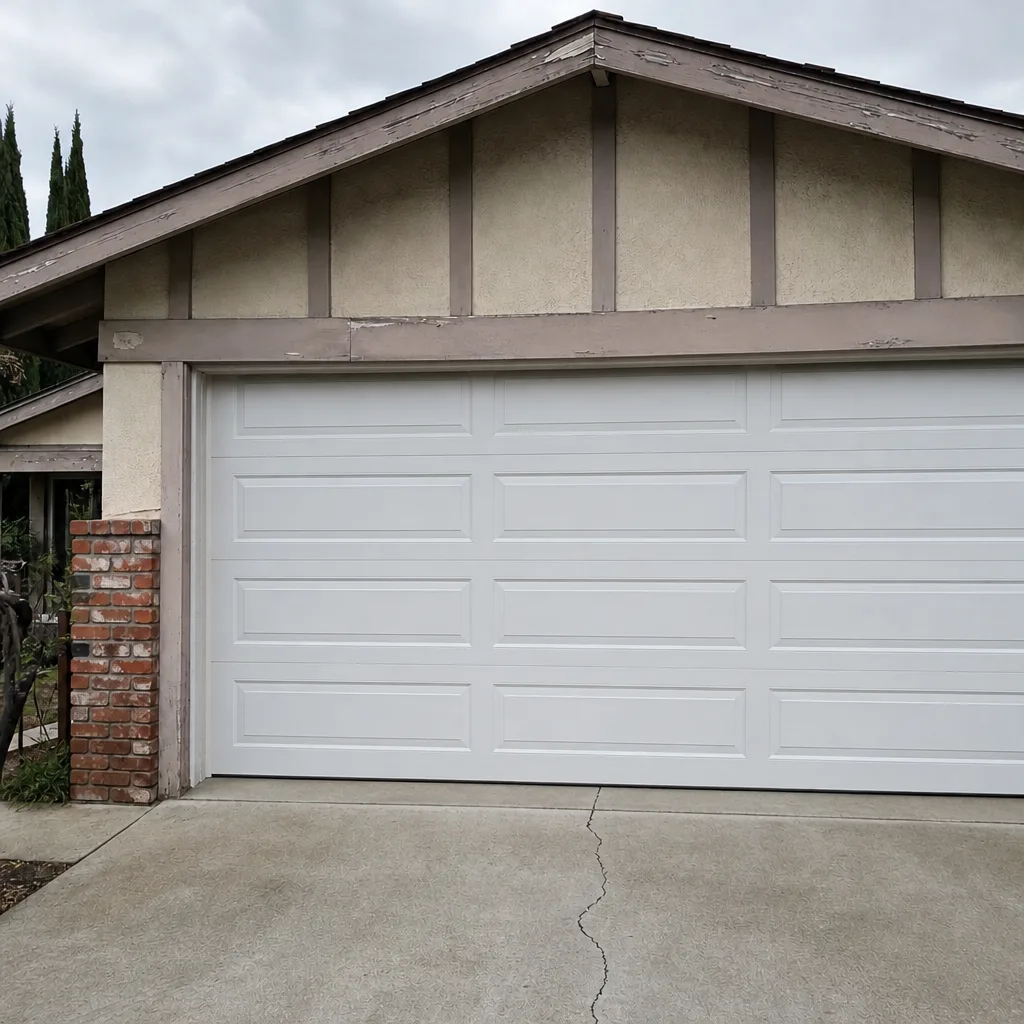 After
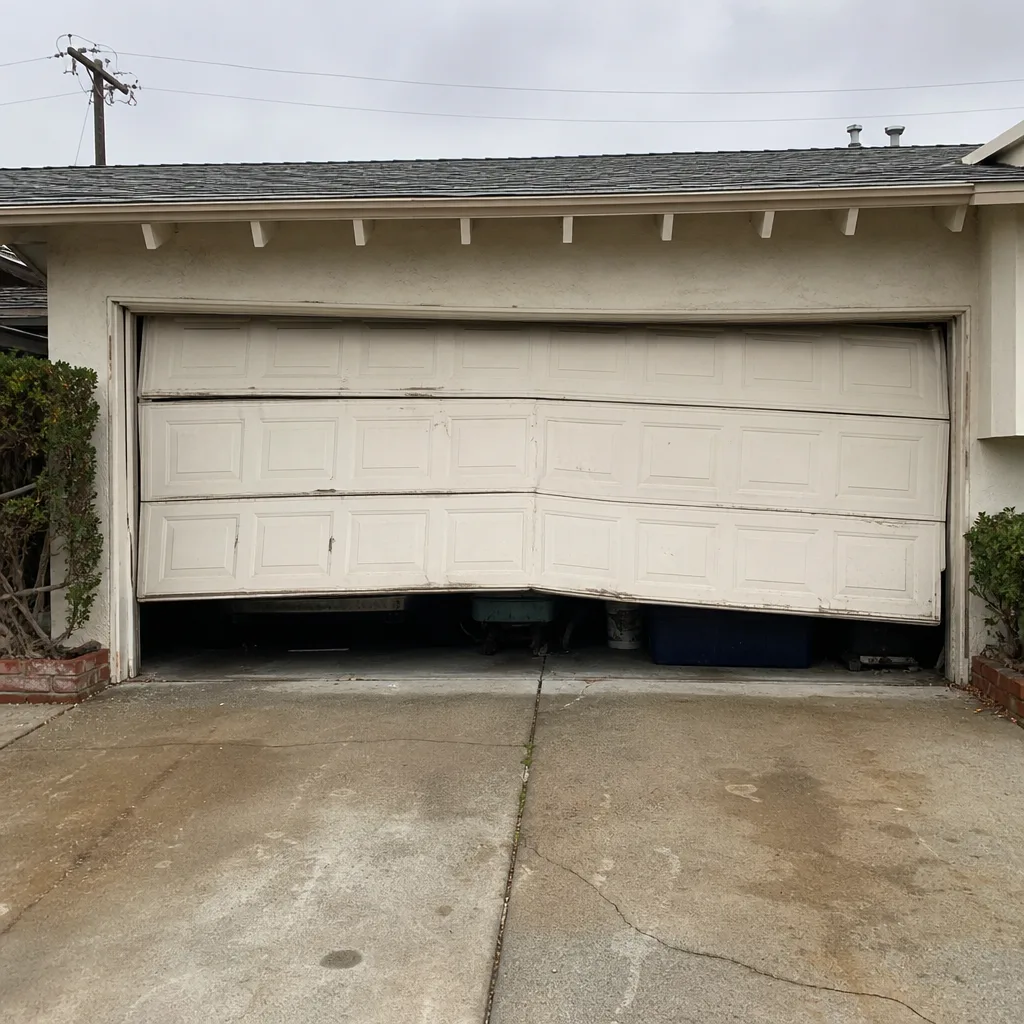 Before
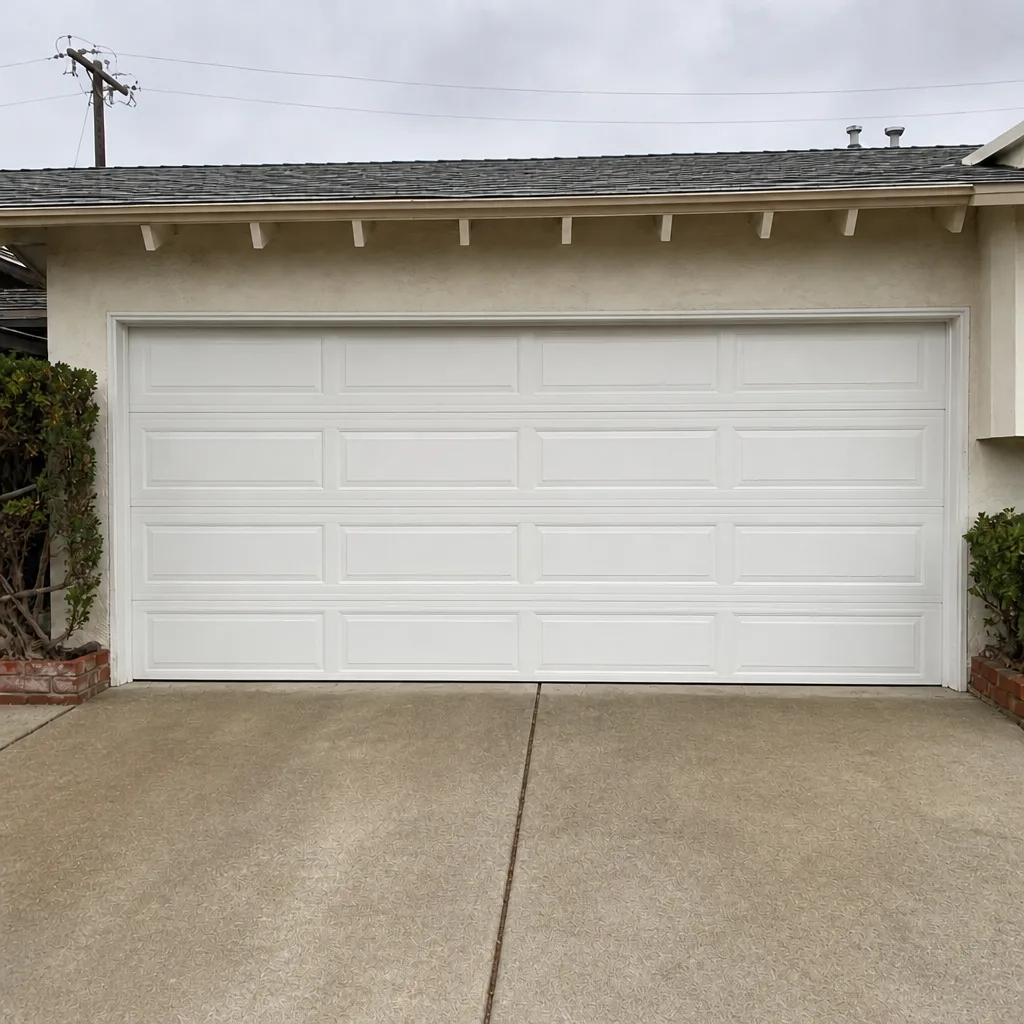 After
Common Mistakes to Avoid: Local Edition
La Habra’s mix of older and newer housing stock creates a specific mistake pattern. Homes in the older neighborhoods near La Habra Boulevard often have original doors that are 20 or 30 years old, with metal rollers and single-panel construction. Those doors fail differently than the newer sectional doors common in the Westridge and Country Hills areas. Trying to apply the same troubleshooting steps to both is where things go wrong.
Another local wrinkle: many La Habra garages double as storage or workshop space. A non-negotiable rule in those garages is keeping the area around the track and the opener head clear. A box nudged against a track is enough to cause a bind. A ladder leaning against the wall can block a sensor. We see a surprising number of “door won’t close” calls in La Habra that come down to a stored item that shifted into the door’s path.
When to Call a Professional
You’ve run the safe tests, you’ve checked the sensors, and the door still won’t cooperate. Or you’ve hit something on the stop-here list: a broken spring, a snapped cable, a door off its tracks, a pulled bottom bracket. In those cases, call. The risk of injury from a door under spring tension is not a risk worth taking with a YouTube tutorial. Garage Door Service La Habra offers free estimates in La Habra. We work on the brand you already have, and garage doors are all we do, so the diagnosis is focused and the fix is targeted. We don’t push replacement when a repair is the right call.
Call (833) 589-9397. We answer 24/7. Fast dispatch from 7am to 7pm, Sunday through Friday.
The Bottom Line
Garage door troubleshooting in La Habra comes down to symptom-to-cause mapping, not guesswork. Read the failure point before reaching for a tool. Run the three safe tests to separate door problems from opener problems. Respect the stop-here list and never touch a spring or cable under tension. And remember that noise is information: a squeal, a grind, and a pop are three different messages from three different components. When the problem is beyond a safe fix, La Habra homeowners can call for a free estimate and a repair-first approach. Call (833) 589-9397. We answer 24/7. Fast dispatch from 7am to 7pm, Sunday through Friday.
Written by the team at Garage Door Service La Habra, serving La Habra since 2018.